What Fire Brand do you want in your home?

Followers

Recent Updates

Celsi Fires Now in the UK

Celsi fires have now been released in the UK, with great reviews all over, the new technology is virtually a computer pretening to be a fire, with clean looks and great prices they are bound to be a hit.More…


Showing posts with label energy saving. Show all posts

Monday, 12 December 2011

Trading standards warning over bogus 'energy saving' plugs

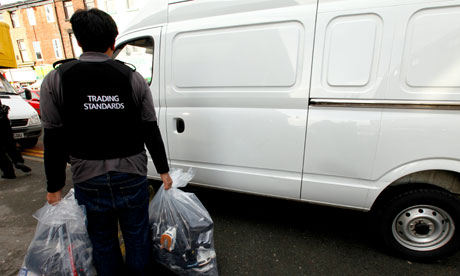
Trading standards officers tackle everything from fake goods to scams and enforce consumer related legislation. Photograph: Christopher Thomond
The £99 plug-in device claims to save users 40% on energy bills, but actually poses a risk of fire and electrocution, Jill Insley of The Guardian Reports

Rogue telephone fraudsters are targeting older people with the offer of "energy saving devices" that could result in fire or electrocution.
The Trading Standards Institute (TSI) is dealing with more than 200 complaints about people who have claimed to be a victim's energy supplier, or working in partnership with them, and are offering a plug-in device costing £99 which they say can save users 40% on energy bills. But trading standards has had a number of the devices tested and found that they not only failed to satisfy electrical safety standards, but do not deliver any tangible energy savings.
Ron Gainsford, TSI chief executive, said: "Consumers are warned not to use the product as they pose a risk of fire and electrocution, and a safety recall has been issued for the items traced so far.
"Unscrupulous criminals are using the rising energy prices as an opportunity to lure cash strapped consumers – elderly people seem to have been deliberately targeted. The number of complaints we are currently dealing with is bound to be only the tip of the iceberg."
The City of Westminster Trading Standards Service has been investigating the scam as the caller gives a London W1 Oxford Street address for the company, but this belongs to a "virtual" office provider.
Sue Jones from Westminster trading standards said: "The companies involved in these scams are not actually situated there. We believe the call centre they use is based abroad and the appliances appear to be distributed by a number of individuals in the UK."
She said complainants had told trading standards the caller always appears to be very credible, already knowing a consumer's details, their energy supplier and sometimes some or all of the digits of their credit or debit card.
"Often consumers do not realise that they have been defrauded until they receive the dodgy looking device with instructions in broken English and the accompanying invoice which names an unknown supplier and often gives an American address," Jones said.
So far, four different suppliers have been named – 1 Stop Marketing Solutions, ITC Development Corp, Power Saver, and Athico Ltd – but the fraudsters could be operating under other names too. Some of these names could be very similar to genuine companies: for example, Power Saver Ltd based in Tonbridge, Kent, is not involved in this fraud.
The director of Athico Ltd appears to have been a victim of the scam himself. He fully co-operated with trading standards and the company has now ceased trading.
If consumers have responded to one of these cold calls they should report the matter via Action Fraud's website or call 0300 123 2040, or call Consumer Direct on 0845 404 0506. They should also contact their bank to stop their debit or credit card. If a device has been received they should not use it and dispose of it carefully.
The plugs involved have the model number SD 001 and are manufactured by MacroPlus, B1208 City Square, Shenzhen, Guangdong, China.
Trading standards said consumers should be cautious about giving out any personal or financial information. They should independently verify a caller's identity before agreeing to purchase any goods or services.
Saturday, 26 November 2011

How To Cut Your Energy Bills...

Almost nine in 10 households (89%) will be rationing their energy use this winter to save on bills, meaning a potential 23 million households will be switching off or turning down their heating, according to uSwitch. It says an average £224 increase in energy prices within the last 12 months has left 87% of consumers worried about the cost of this year's winter fuel bill.
In October The Guardian asked readers for their tips on cutting energy bills.
They were contacted by a retired 66-year-old retired academic who worked at a London university. She spent half her working life caring for her children and doing voluntary work, which reduced her pension, so she now makes an effort to keep her heating bills down. She has taken rationing her energy use to a new level, and she wanted to share her methods.


"People talk as if very high energy bills are inevitable, whereas often these could be cut a little or a lot, and in ways that can improve our quality of life. I've just had my quarterly bills: electricity £7.44 (+ VAT + standing charge = £12.89) and gas £7.88 (+ VAT but minus dual fuel discount = £4.75).

"If you asked me to score my quality of life from one to 10, I would definitely say 12 plus.

"I am a pensioner, at home and with the computer on most of the time, who pays well under £100 for my annual, total, combined gas and electricity bills. I have worked out gradually how to do this, and now find it so easy it is automatic.

"Although I am very lucky in my housing and neighbourhood, at least some of my savings could be made by anyone. A few ideas are fairly costly to set up, but they could be paid for many times over in savings on later annual bills – especially given that carbon fuel prices are only going to keep rising.

"Three years ago I moved house, and chose an end-of-terrace home with a south- and west-facing living room, and no nearby tall trees or buildings. The living room has patio doors and even in deepest winter, on sunny days, it heats up to more than 20C. If you have any blank walls that face east or west, but preferably south, could you possibly put in a double-glazed window? The larger the better. Patio doors heat up rooms much more than ordinary windows do.

"Insulated cavity walls and roof increase the winter warmth. I have carpets here – much cosier than the laminate floors in my last home – and cream 'blackout' curtains which give excellent insulation.

"I do not use central heating. Instead, I use the warm living room almost all the time in winter. Okay, the other rooms are chilly. But does that matter as long as you only need to use them briefly during the day, and you have one really warm room, or two for larger families?

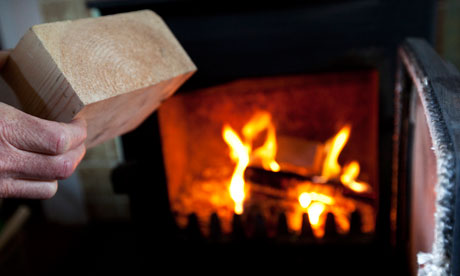
"My main heating is a wood-burner, and for that you have to have a chimney or some kind of wall outlet. My burner, with installation by a plumber, cost about £500. Even a large room is fine with a small burner, and they last forever.

"The other expenses are logs – about £200 a year. So that does bring my fuel bills up to nearly £300, and you do need somewhere to store the logs without having to carry them far. There is very little ash, which only needs clearing out into a small bag about once a month. The annual chimney sweep costs about half the price of checking the gas boiler.

"You can get burners with in-built boilers, which heat radiators and water tanks. Instead, I always keep a filled kettle on my burner, and add that hot water to pans or to an electric kettle whenever I need boiling water. I slow-cook stews on the burner, after heating them on a hob, and you can hang clothes around for very quick drying.

"My glass-fronted burner is a beautiful companion. Throughout the year, I collect twigs and lumps of fallen wood in nearby parks to use for kindling and to start a quick blaze in the morning.

"For unheated bedrooms you can use one or two – or three – hot water bottles (from the burner kettle) and lots of warm covers. It can be more pleasant to sleep in a warm bed in a cold winter room than in a hot summer bedroom where you cannot control the temperature.

"Maybe you are thinking about the misery of cold kitchens and bathrooms. During winter I prepare food, and the hot water for cooking and washing up, in the living room – so need to spend little time in the kitchen. Jackets and jerseys are handy for longer spells in the kitchen. Living in inner London I have shops near by. I use them as my main larder, so I can do without a freezer, and I turn on my fridge only briefly to cool white wine, or occasionally for the grandchildren's ice-cream. Food keeps well in cool kitchens.

"I buy milk every other day, and keep the carton in a jug of cold water. Shopping every day or two ensures that food is fresh and varied. Another advantage is not having a fridge full of stuff near its end-of-shelf life, which helps to reduce overeating and throwing away stale food.

"The bathroom is the other great energy consumer. Older people will remember how in the 1940s-1950s we tended to have a bath once or twice a week. Advertisers have lately persuaded us that it is unhealthy and disgusting to shower less than at least once a day. Yet a quick wash, with water from a kettle, is fine for most days – or a leisurely wash in front of the burner. Baby wipes are a great invention, and I can guarantee no one will guess if you haven't had a shower for five days.

"Maybe you are thinking that a good quality of life demands several warm though hardly used rooms, plenty of hot water on tap, and lots of electric equipment on standby. But think about all the things you could buy instead of burning money on fuel bills."
That's how our academic cuts her costs. Saving that much money clearly takes a lot of effort, so would you be willing to go that far in the name of smaller utility bills?

While her ideas seem to do a great deal to reduce fuel bills overall and the idea of using a woodburning stove to provide the main heat for a room is a great idea. Especially when using a Stove fan to help circulate the warm air around the room.

However it seems to me that her determination to cut energy bills is driving the cost of general living up, for example I think it would be cheaper to pay for the cost of heating water for a shower every day or every other day rather than a constant supply of baby wipes!
Also the cost of running a modern, energy efficient Fridge Freezer also would be less than the cost of buying food on a daily basis from a local shop, which can often be more expensive than a weekly or half-weekly shop from a supermarket.

Thursday, 24 November 2011

Saving money through energy efficiency

With the UK's major energy suppliers bumping up their prices by up to 18% this winter, the belated arrival of the cold winds represents a great opportunity to look at ways of cutting your fuel bills.
The imminent announcement of a consultation on the government's Green Deal, which aims to help you make your home more energy-efficient, should provide an added incentive.
And there are lots of ways you can save money - in some cases a great deal - just by making a few simple upgrades to your home.
Some improvements cost virtually nothing and can take a matter of minutes to install; others require a bit of capital and expert help. Others still require small changes in habits that should more than reward the effort.
All are well worth considering. According to the Energy Saving Trust (EST), the average household could save about £280 a year on its fuel bills by being more energy efficient. Bearing in mind the average bill is about £1,300, that's quite some saving.
This equates to more than a tonne of carbon emissions every year, thus helping to combat rising global temperatures.
There are plenty of schemes around to help you get a better idea of what upgrading your home to make it more efficient actually involves.
Old Homes Superhomes is one such project, which is supported by the National Energy Foundation. Sarah Harrison, head of Eco-refurbishment, says the scheme can help people understand not just the financial benefits of so-called retro-fitting, but also how upgrading homes can improve your quality of life.
Insulation When it comes to energy efficiency, the smallest measures are often the most effective, so insulation is a good place to start.

Top tip

The most cost-effective energy efficiency measure you can use is to place kitchen foil behind your radiators to reflect heat, according to the National Energy Foundation.
Doors and windows can then be sealed quickly and easily using self-adhesive foam and rubber strips, and draught excluders. Seal up any gaps between your floors and skirting boards and, together, these measure could save you more than £50 a year, according to the EST.
Next look at insulating your loft and walls properly - about a third of an uninsulated home's heat is lost through the walls, and about a quarter through the roof.
Walls will require varying degrees of works depending on their construction, but proper insulation can save hundreds of pounds a year. Just topping up your loft insulation can also shave a substantial amount off your annual bills.
Also look at secondary and double glazing - almost 20% of heat loss from the average home comes from windows.
Heat loss from an uninsulated home
Heating Upgrading old electric storage heaters to modern alternatives can save you more than £100 a year, and in some cases considerably more.
Replacing an old, inefficient boiler with an A-rated condensing model could save as much £300 a year, although you will have to decide whether this is worth the £1,000 to £2,000 cost of buying and installing one.
Even fitting a room thermostat could save you more than £50 a year.
Energy-efficient behaviour You may scoff at the point of turning off appliances when you're not using them, but add up all the savings and they can be worthwhile.
For example, switching plugs off at the wall and avoiding standby mode on TVs, computers, stereos and the like, together with switching off lights when you don't need them, could save you almost £50 a year.
Wash your clothes at 30 degrees instead of 40 and don't use a tumble dryer in the summer, and you could save another £30.
Upgrading appliances/electronics If you need to replace any domestic appliance, then it may be worth spending a little extra to get the most energy-efficient model you can afford. Some fridge/freezers with an A+ energy rating can be incredibly affordable.
They are all rated by law, from A to G, so you can tell how efficient they are. However, there is a great deal of variation within these bands, so also make sure you look at the specific figures on energy consumption. Some appliances, such as dishwashers and washing machines, also have grades A+++, A++ and A+.
Very roughly, a new efficient appliance could save you between £20 and £40 a year on energy bills, according to the EST.
More modern consumer electronics are also more energy-efficient. And if you're looking for a new television, bear in mind that LED TVs are more efficient than LCDs, which in turn are a good deal more efficient than Plasmas, according to Which?
Not strictly an appliance, granted, but replacing old incandescent light bulbs with energy efficient versions can save you £3 a pop.
Annual cost savings of energy efficient measures
Energy generation and renewables Domestic wind turbineThese measures aren't about upgrading what you already have, but investing in technologies that allow you to generate your own energy.
As a result, they can be quite expensive, which is one of main reasons why the government is launching its Green Deal.
Feed-in tariffs are available for domestic energy generation
One way is to use wood to heat your home. According to the EST, replacing electric heaters with a wood pellet heating system could save as much as £580 a year.
Carbon emissions would also be reduced, as the carbon dioxide given off when burning is offset by the carbon absorbed by the tree from which the wood was cut.
Solar panels are another popular way to generate power, and can typically provide about three-quarters of an average home's electricity needs.
Wind turbines are an alternative that, if situated in the right part of the country, can provide more than enough electricity to power a typical home.
Government feed-in tariffs mean you get paid to generate electricity, and for selling any excess to the main grid. In fact, one turbine could generate savings and income of more than £3,000 a year including tariffs, the EST says.
Another option is heat pumps, which take heat from the air or the ground but which need electricity to run. In some cases, these are better at saving on carbon emissions than money.
You will need to calculate the payback time carefully when deciding whether to invest in any of these technologies. But remember that if you sell your home, the buyer can also benefit from the cost savings, which can add to the value of your property in their eyes.

Tuesday, 11 October 2011

The World’s first green electricity company:

With the Green Energy movement increasing in popularity on an almopst daily basis we have a look at once of the main companies looking to supply green energy into the future.

Green Electricity didn't exist in the world back in 1996. When Ecotricity offered it for the first time, they became not just Britain’s but the world’s first Green Electricity company – and kick-started the now global Green Electricity movement. Ecotricity's mission was and remains to change the way electricity is made and used in Britain.
Ecotricity chose this focus because conventional electricity is responsible for 30% of Britain’s carbon emissions – it’s our biggest single source as a nation – and therefore the biggest single thing we can change.

Ecotricity operate a unique model. Using customers’ energy bills to fund the building of new sources of Green Energy. They like to refer to this as turning ‘Bills into Mills’ – energy bills into windmills.
With no shareholders to answer to they’re free to dedicate all their attention to the task of building new sources of Green Energy. And that’s just what they do, on average spending more each year per customer on new sources of Green Energy than any other energy company in Britain - bar none.

Energy is the key:

Electricity is the biggest single source of carbon emissions in Britain – but it’s not the only one of course. The big three are Energy, Transport and Food: between them accounting for 80% of all of our personal carbon footprints. The one thing they have in common is that Energy plays a vital role in them all. That’s why Ecotricity extended their work beyond the boundaries of traditional energy companies.
In Transport they built the Nemesis, Britain’s first electric super car – to demonstrate how cars of the future could actually be wind powered. Next came our Electric Highway, the world’s first national network of charging stations - to kick-start the electric car revolution in Britain.

Ecotricity also built the first national charging network for electric cars. For first time electric vehicles will be able to travel the length and breadth of Britain using the world’s first national charging network at motorway service stations across the country.
Every charging post will be powered with 100% green energy made at Ecotricity’s wind and solar parks across the UK, and means that electric car drivers (and motorcycle riders) will be able to drive from London to Edinburgh or Exeter completely free and with vastly reduced emissions.
This breakthrough in electric car infrastructure removes one of the main barriers for people wanting to buy electric cars – range anxiety – which currently restricts people to driving within their own city.

With Ecotricity looking to take bigger and bolder steps into the forefront of producing green energy, with the world's first dual-fuel green tariff and plans afoot for mills to produce green gas and even more wind turbines, sun parks and other renewable energy, it may not be long before you consider switching from a conventional energy supplier to one that truly has Green Credentials.

Wednesday, 5 October 2011

Smart homes: take remote control


Your mobile phone will soon allow you to switch your domestic electrical gadgets on and off – and cut your bills – from anywhere in the world

By Miles Bignall

 You get out of work early for once. How good would it be to be able to turn on your central heating before you get home so it's all toasty as you step through the door? Or you left for work in a hurry, and are worried that the hair straighteners are still plugged in. What a relief it would be to turn them off en-route using your mobile phone?
It might sound like something from Tomorrow's World, but both prospects are closer than you think.
In the next few months British Gas is set to start the first big trial of "smart home" technology, and, if all goes well, it plans to begin installing it commercially in customers' UK homes over the next year.
The final price is still to be settled, but the company hopes to bring the package in at under £200. For that, consumers will get the technology they need to create their first "smart home", although they'll need to pay extra for any smartplugs that allow you to turn off appliances remotely. These cost around £25 each.
The service is likely to excite gadget fiends and those hoping to reduce their gas and electricity bills. Buyers should easily save the installation cost through lower bills that result in not heating their homes when they are not there.
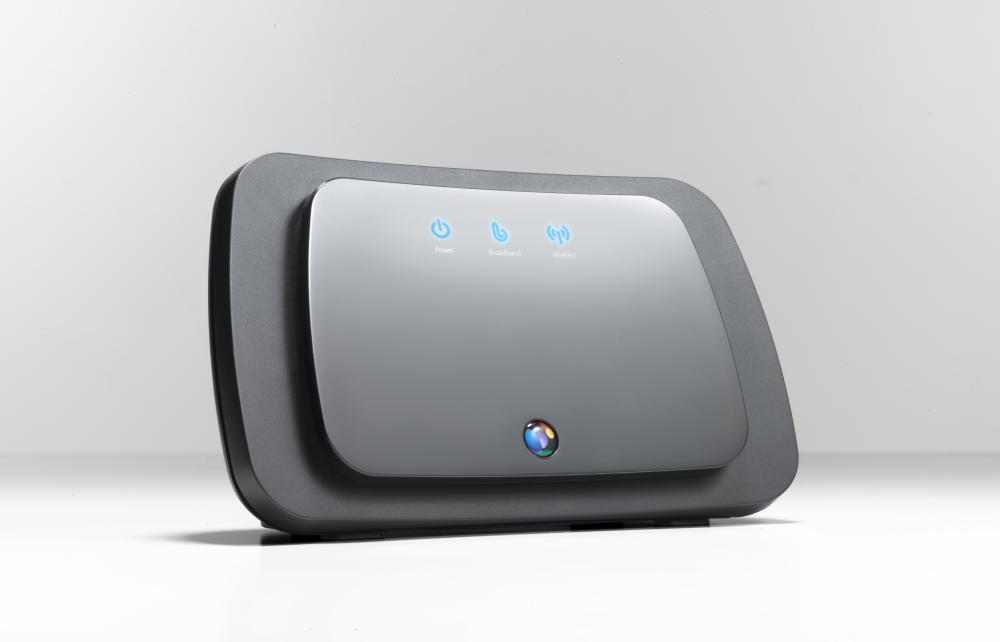
At its heart is a control box that is linked to the home's broadband hub. Users have to upgrade their thermostat to a (supplied) digital model, but apart from that, it should install in almost every broadband-linked home.
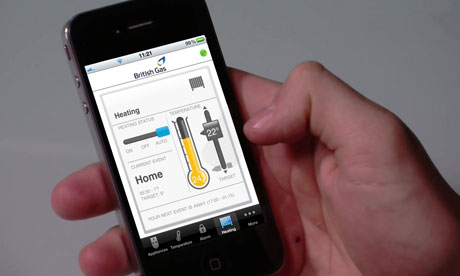
It effectively lets you talk to the central heating system from anywhere in the world. You can also use it to turn on, or off, other key appliances using the smartplugs that send and receive messages wirelessly to the central hub.
The technology to make it happen already exists. British Gas has set up the system in a mock home in its laboratory at its Staines headquarters, and a small group of staff are testing it in their homes.
This week Guardian Money had a sneak preview of the system that has been developed in conjunction with AlertMe, a company in which British Gas owns a 20% stake.
Sitting in our London office we were able to turn the heating and lighting in the Staines "smart home" on and off. The service has a dedicated web page which showed us which appliances had been left on.
We were able to see the inside and outside temperatures, turning the heating up and down accordingly – a boon for those who fear their partner overheats the home while they are at work.
If you don't have a smart phone, the system can be just as easily controlled with a basic text message sent from a standard mobile or any PC.
Paul Grosvenor, British Gas's head of innovation, and one of those who has been using it for the last year, says that he has definitely seen lower gas and electricity bills as a result of the tests: "Consumers are increasingly demanding the ability to do more with the latest technology, and we see 'smart homes' as the future. This technology gives you the ability to conserve energy because you use it more cleverly. You are in control, wherever you are."
He says he regularly used it last winter to change his heating settings, even turning on the system while he was away to protect the home from freezing during the really cold spell. He says he also found it a much easier way to set up his boiler timings than the original complicated system.
British Gas says the system will eventually have the ability to be customised. With smart key fobs it will be possible to configure it to shut down every appliance linked to a smart plug, plus the heating, when you leave the premises.
In the long run, it will also be linked to the home's smart meter, although it will also work with a conventional meter.
Along with the other big power companies, British Gas is already in the process of offering smart meters to every customer as they have their old ones replaced.
These are read remotely using the mobile phone network, doing away with the need for a call from a meter reader. They will also do away with estimated bills and can be linked to the latest in-home displays, that show householders exactly how much power they are consuming at any one time, both in kilowatt hours and, more crucially, in pounds and pence.
Leave too many appliances on, and the smart meter display will show a red warning light – great for those with children who tend to leave everything on.
Meanwhile, there is one drawback to the introduction of a remote control heating system – it could promote "couch potato syndrome".
Grosvenor is ashamed to admit he has used his mobile to turn up the heating from his sofa, instead of walking over to the thermostat.
"If you're lying in bed on a Saturday morning and the heating's gone off, it's very tempting to send a text to turn it on again rather than going down into a cold house," he says.

Wednesday, 21 September 2011

Explaining The Science Behind Climate Change

A new website that explains the science behind climate change was recently launched by Professor Sir John Beddington, The Government's Chief Scientific Adviser.
The website, which can be foind at www.bis.gov.uk/go-science/climatescience presents an overview of some of the most important areas of climate science study and aims to help those wishing to get behind the day-to-day headlines to learn more about the fundamental scientific issues involved.
With few areas of science having such profound implications for publuc policy and society, it is a research field not without controversy and headline hitting stories. For those uncertain about the state of scientific knowledge, the web resource explains where evidence is well established and where findings and projections remain uncertain.
Sir John said " Reporting on climate change science has often created more heat than light. The evidence is compelling that climate change is happening, that human activities are the major driver and that the future risks are substantial.
At the same time there is much we need to understand better; for example, the pace and extent of the changes we can expect, and regional impacts."
"The fact that uncertainty exists in climate science, as it does in other fields, does not detract from the value of evidence. But an appreciation of the nature and degree of uncertainty, and of the lielihood and potential severity of risks, is critical if the science is to properly inform decision-making."
The online rescource, hosted in a new section of the Government Office for Science website, explains the scientific issues, evidence and principles behind a number of key points including the contribution of human activities to climate change and how greenshouse gases actually hea the earth.
Carbon Dioxide levels are now over a third higher than they were before the industrial revolution and allegedly continues to rise fast.
Several independent studies show global average temperatures to be rising and many other observations such as Arctic summer sea ice extent, are said to confirm the long term warming trend.

Wednesday, 14 September 2011

Save money on your heating bills with a new, smart energy meter

British Gas launch touch-screen meter reader to help customers set energy budgets and save money on bills.
To help homeowners control their bills and save money, British Gas are rolling out touch screen smart meters to their customers that will show exactly how much energy is being used in pounds and pence and allow for energy comparisons by hour, day, week and year.
Customers can use the touch screen meter reader panel to set up a user profile based on a few questions about the house — e.g. property type and number of rooms — so that energy consumption can be budgeted against realistic targets. It then uses a traffic light system to alert users as to when large amounts of gas or electricity are being used. Monitoring energy bills with the smart meter aims to help households save up to 10 per cent on their bills, equivalent to £105 a year.
The touch screen pad can be placed anywhere in the home and meter readings will be sent directly to British Gas so there’s no more estimated bills, only bills based on exact usage.
British Gas has installed 400,000 meters in customer’s homes already and will begin the roll out again this month to have it in 10 million British Gas homes by 2019*. It’s a phased roll out so smart meters will first be given to households where old meters have reached the end of their lifecycle and need replacing. The same will apply to new customers – a smart meter will only replace meters that have reached the end of their lifecycle.
Find out more about smart meters at britishgas.co.uk...

Tuesday, 23 August 2011

NPower joins the rise


npower has become the latest gas and electricity provider to increase its domestic prices with fixed rates for the next two years, blaming the decision on "world events [which] have pushed up prices".

From 1 October, the average dual fuel customer will see an increase of 37p per day. Single fuel customers will see a 15.7% rise in fees for gas and 7.2% for electricity.

Kevin Miles, chief commercial officer at RWE npower – which is part of the RWE group that owns npower – said: "I know it hurts everyone when we put up prices and I wish we didn’t have to.

“With reduced quantities of North Sea gas, we are now forced to buy energy on the volatile global wholesale market. World events have pushed up prices and we believe this trend will continue.

"In the UK we have also seen rising distribution and network charges, and further environmental costs but we have still managed to keep our increases lower than those announced by any other major supplier," referring to companies including British Gas, Eon and SSE.

Wednesday, 3 August 2011

Planning a new kitchen? Cut your energy costs

If you think that installing loft-insulation, fitting double-glazing, or changing your heating and hot water systems sounds disruptive – you’re not the only one. Many people feel that it takes time and patience to install energy efficient measures in their home - time they don’t have.

At the Energy Saving Trust we’ve listened and realised that it is more cost-effective and less disruptive to incorporate energy efficient measures at the same time you are undergoing smaller refurbishment work on your home anyway. Whether it’s fitting a new kitchen or refurbishing a room for the arrival of a new baby, you’ll already be ready for the disruption and the cost that comes with such projects.

So we have produced a series of room-by-room guides introducing the benefits of incorporating energy saving measures whilst refurbishing a home.

The first guide from this series is for kitchen refurbishment and is designed to help you choose the right energy saving measures when building your new kitchen.

The kitchen guide is a sneak preview into the series of guides coming out soon including: a bathroom and living space refurbishment guide and a loft conversions and heating and hot water systems guide. These will become available later this year.

So if you’ve got your eye on a new kitchen suite – grab a guide and see how installing energy efficient measures in your home will save you money in the long-run!

Friday, 22 July 2011

Give Your Home A Free Check-Up


If you are looking for ways to stop wasting energy and money you'll find lots of ideas here. The Energy Saving Trust is a non-profit organisation that provides free and impartial advice on how to save energy.

The Energy Savings Trust are currently offering a free online evaluation of your property to allow you to see just how much energy you can save by making some improvements to your home, and unlike many other similar reports, it doesnt just give you how much Carbon Dioxide emissions you could reduce, it also gives you it in quids, mulah, money and that really does hit home. Especially with the rising British Gas prices that for dual fuel households already stands to add some £200 + to your annual heating bill.

The check just requires a few details such as the terrain your house is situated in, how many rooms etc, but once this has been completed you can choose to either have the report emailed to you or posted out, below you will see part of the report I recieved:As you can see I could save up to £346 per year and reduce my carbon footprint by over 2 tonnes by doing simple things such as upgrading a boiler (something I'm saving up for) making sure my loft is insulated as well as suggesting slightly more expensive options such as solar water heating or Solar Photovoltaic panels on the roof heat heat my water or generate electricity.

This report only takes ten minutes but the savings could be unfathomable and just think where you could spend that money you've saved.