What Fire Brand do you want in your home?

Followers

Recent Updates

Celsi Fires Now in the UK

Celsi fires have now been released in the UK, with great reviews all over, the new technology is virtually a computer pretening to be a fire, with clean looks and great prices they are bound to be a hit.More…


Showing posts with label electricity. Show all posts

Friday, 14 October 2011

Ofgem Reports record profits for energy suppliers

The profit margin for energy firms has risen to £125 per customer per year, from £15 in June, says regulator Ofgem.
The profit margin figure measures the amount suppliers would make if energy prices and bills were to remain unchanged for the next year.
Ofgem predicts these profit margins, which apply to dual-fuel bills, will fall to about £90 a customer next year.
Ofgem has also confirmed it will force suppliers to simplify tariffs to make it easier to compare prices.
As part of the simplification plan, suppliers will be forced to have no-frills tariffs, which would consist of a standing charge - fixed by the regulator - plus a unit charge for energy used.
It means that the only number consumers would have to compare between suppliers would be the unit energy charge.
"The process of trying to switch from one supplier to another is hideously complicated - very off-putting even for quite intelligent people," Tim Yeo MP, chair of the Energy and Climate Change Committee told the BBC.
He also criticised the rise in profit margins to a three-year-high as, "evidence of absolutely crass behaviour by the energy companies, with a jump in prices announced in the last few months ahead of what will be a winter in which most families face their highest ever electricity and gas bills".
Market reforms More complicated tariffs would still be available, but they would have to be for a fixed period, with price increases not being allowed for the duration of the deal.
The regulator will publish its detailed proposals for consultation next month and hopes to have implemented some of its reforms in time for winter 2012.
The average dual-fuel bill is now £1,345 a year following recent price rises from all the big suppliers.
"When consumers face energy bills at around £1,345 they must have complete confidence that this price is set by companies competing in a fully competitive market," said Ofgem's chief executive Alistair Buchanan.
"At the moment that is not the case."
In addition to trying to boost competition by simplifying tariffs, Ofgem is looking at how to reform the wholesale energy markets, which are the places suppliers go to buy their energy.
Ofgem wants to reform those markets to allow greater competition with the big suppliers and will publish proposals in December.
The bigger suppliers have an advantage because they generate their own power, selling most of it to consumers, with little of it going to wholesale markets.
But earlier in the week, Scottish and Southern Energy announced plans to auction all of its power on the open market.
Ofgem has proposed that utilities must auction 20% of their electricity by 2013.

Tuesday, 11 October 2011

The World’s first green electricity company:

With the Green Energy movement increasing in popularity on an almopst daily basis we have a look at once of the main companies looking to supply green energy into the future.

Green Electricity didn't exist in the world back in 1996. When Ecotricity offered it for the first time, they became not just Britain’s but the world’s first Green Electricity company – and kick-started the now global Green Electricity movement. Ecotricity's mission was and remains to change the way electricity is made and used in Britain.
Ecotricity chose this focus because conventional electricity is responsible for 30% of Britain’s carbon emissions – it’s our biggest single source as a nation – and therefore the biggest single thing we can change.

Ecotricity operate a unique model. Using customers’ energy bills to fund the building of new sources of Green Energy. They like to refer to this as turning ‘Bills into Mills’ – energy bills into windmills.
With no shareholders to answer to they’re free to dedicate all their attention to the task of building new sources of Green Energy. And that’s just what they do, on average spending more each year per customer on new sources of Green Energy than any other energy company in Britain - bar none.

Energy is the key:

Electricity is the biggest single source of carbon emissions in Britain – but it’s not the only one of course. The big three are Energy, Transport and Food: between them accounting for 80% of all of our personal carbon footprints. The one thing they have in common is that Energy plays a vital role in them all. That’s why Ecotricity extended their work beyond the boundaries of traditional energy companies.
In Transport they built the Nemesis, Britain’s first electric super car – to demonstrate how cars of the future could actually be wind powered. Next came our Electric Highway, the world’s first national network of charging stations - to kick-start the electric car revolution in Britain.

Ecotricity also built the first national charging network for electric cars. For first time electric vehicles will be able to travel the length and breadth of Britain using the world’s first national charging network at motorway service stations across the country.
Every charging post will be powered with 100% green energy made at Ecotricity’s wind and solar parks across the UK, and means that electric car drivers (and motorcycle riders) will be able to drive from London to Edinburgh or Exeter completely free and with vastly reduced emissions.
This breakthrough in electric car infrastructure removes one of the main barriers for people wanting to buy electric cars – range anxiety – which currently restricts people to driving within their own city.

With Ecotricity looking to take bigger and bolder steps into the forefront of producing green energy, with the world's first dual-fuel green tariff and plans afoot for mills to produce green gas and even more wind turbines, sun parks and other renewable energy, it may not be long before you consider switching from a conventional energy supplier to one that truly has Green Credentials.

Wednesday, 5 October 2011

Smart homes: take remote control


Your mobile phone will soon allow you to switch your domestic electrical gadgets on and off – and cut your bills – from anywhere in the world

By Miles Bignall

 You get out of work early for once. How good would it be to be able to turn on your central heating before you get home so it's all toasty as you step through the door? Or you left for work in a hurry, and are worried that the hair straighteners are still plugged in. What a relief it would be to turn them off en-route using your mobile phone?
It might sound like something from Tomorrow's World, but both prospects are closer than you think.
In the next few months British Gas is set to start the first big trial of "smart home" technology, and, if all goes well, it plans to begin installing it commercially in customers' UK homes over the next year.
The final price is still to be settled, but the company hopes to bring the package in at under £200. For that, consumers will get the technology they need to create their first "smart home", although they'll need to pay extra for any smartplugs that allow you to turn off appliances remotely. These cost around £25 each.
The service is likely to excite gadget fiends and those hoping to reduce their gas and electricity bills. Buyers should easily save the installation cost through lower bills that result in not heating their homes when they are not there.
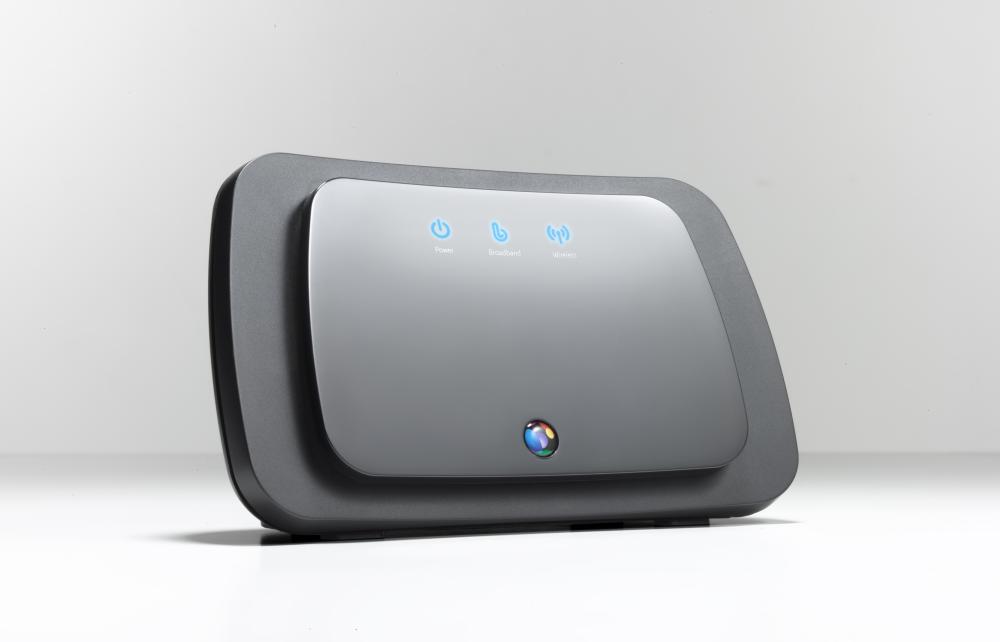
At its heart is a control box that is linked to the home's broadband hub. Users have to upgrade their thermostat to a (supplied) digital model, but apart from that, it should install in almost every broadband-linked home.
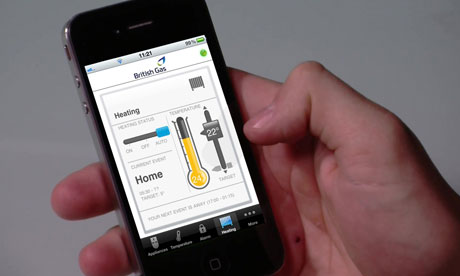
It effectively lets you talk to the central heating system from anywhere in the world. You can also use it to turn on, or off, other key appliances using the smartplugs that send and receive messages wirelessly to the central hub.
The technology to make it happen already exists. British Gas has set up the system in a mock home in its laboratory at its Staines headquarters, and a small group of staff are testing it in their homes.
This week Guardian Money had a sneak preview of the system that has been developed in conjunction with AlertMe, a company in which British Gas owns a 20% stake.
Sitting in our London office we were able to turn the heating and lighting in the Staines "smart home" on and off. The service has a dedicated web page which showed us which appliances had been left on.
We were able to see the inside and outside temperatures, turning the heating up and down accordingly – a boon for those who fear their partner overheats the home while they are at work.
If you don't have a smart phone, the system can be just as easily controlled with a basic text message sent from a standard mobile or any PC.
Paul Grosvenor, British Gas's head of innovation, and one of those who has been using it for the last year, says that he has definitely seen lower gas and electricity bills as a result of the tests: "Consumers are increasingly demanding the ability to do more with the latest technology, and we see 'smart homes' as the future. This technology gives you the ability to conserve energy because you use it more cleverly. You are in control, wherever you are."
He says he regularly used it last winter to change his heating settings, even turning on the system while he was away to protect the home from freezing during the really cold spell. He says he also found it a much easier way to set up his boiler timings than the original complicated system.
British Gas says the system will eventually have the ability to be customised. With smart key fobs it will be possible to configure it to shut down every appliance linked to a smart plug, plus the heating, when you leave the premises.
In the long run, it will also be linked to the home's smart meter, although it will also work with a conventional meter.
Along with the other big power companies, British Gas is already in the process of offering smart meters to every customer as they have their old ones replaced.
These are read remotely using the mobile phone network, doing away with the need for a call from a meter reader. They will also do away with estimated bills and can be linked to the latest in-home displays, that show householders exactly how much power they are consuming at any one time, both in kilowatt hours and, more crucially, in pounds and pence.
Leave too many appliances on, and the smart meter display will show a red warning light – great for those with children who tend to leave everything on.
Meanwhile, there is one drawback to the introduction of a remote control heating system – it could promote "couch potato syndrome".
Grosvenor is ashamed to admit he has used his mobile to turn up the heating from his sofa, instead of walking over to the thermostat.
"If you're lying in bed on a Saturday morning and the heating's gone off, it's very tempting to send a text to turn it on again rather than going down into a cold house," he says.

Wednesday, 14 September 2011

Save money on your heating bills with a new, smart energy meter

British Gas launch touch-screen meter reader to help customers set energy budgets and save money on bills.
To help homeowners control their bills and save money, British Gas are rolling out touch screen smart meters to their customers that will show exactly how much energy is being used in pounds and pence and allow for energy comparisons by hour, day, week and year.
Customers can use the touch screen meter reader panel to set up a user profile based on a few questions about the house — e.g. property type and number of rooms — so that energy consumption can be budgeted against realistic targets. It then uses a traffic light system to alert users as to when large amounts of gas or electricity are being used. Monitoring energy bills with the smart meter aims to help households save up to 10 per cent on their bills, equivalent to £105 a year.
The touch screen pad can be placed anywhere in the home and meter readings will be sent directly to British Gas so there’s no more estimated bills, only bills based on exact usage.
British Gas has installed 400,000 meters in customer’s homes already and will begin the roll out again this month to have it in 10 million British Gas homes by 2019*. It’s a phased roll out so smart meters will first be given to households where old meters have reached the end of their lifecycle and need replacing. The same will apply to new customers – a smart meter will only replace meters that have reached the end of their lifecycle.
Find out more about smart meters at britishgas.co.uk...

Friday, 22 July 2011

Give Your Home A Free Check-Up


If you are looking for ways to stop wasting energy and money you'll find lots of ideas here. The Energy Saving Trust is a non-profit organisation that provides free and impartial advice on how to save energy.

The Energy Savings Trust are currently offering a free online evaluation of your property to allow you to see just how much energy you can save by making some improvements to your home, and unlike many other similar reports, it doesnt just give you how much Carbon Dioxide emissions you could reduce, it also gives you it in quids, mulah, money and that really does hit home. Especially with the rising British Gas prices that for dual fuel households already stands to add some £200 + to your annual heating bill.

The check just requires a few details such as the terrain your house is situated in, how many rooms etc, but once this has been completed you can choose to either have the report emailed to you or posted out, below you will see part of the report I recieved:As you can see I could save up to £346 per year and reduce my carbon footprint by over 2 tonnes by doing simple things such as upgrading a boiler (something I'm saving up for) making sure my loft is insulated as well as suggesting slightly more expensive options such as solar water heating or Solar Photovoltaic panels on the roof heat heat my water or generate electricity.

This report only takes ten minutes but the savings could be unfathomable and just think where you could spend that money you've saved.

Monday, 18 July 2011

British Gas Announces Price Increase

British Gas has announced it is increasing its domestic tariffs for gas by an average 18%, and for electricity by an average 16%, on 18 August, 2011.

The rise is in response to a 30.2% increase in wholesale costs. The energy company attributes the rise to the higher global demand for gas, "driven by increased consumption in Asia and the impact on supply of unrest in the Middle East and North Africa.

British Gas claims it is currently making a loss on the energy it sells, which it says "cannot continue... as it needs to be a profitable business in order to invest in future sources of energy for Britain".

British Gas' managing director, Phil Bentley, explained: "We know there is never a good time to raise prices, but we are buying in a global energy market and have to pay the market rate."

Until August, Bentley is urging current customers not to jump ship just yet. "Our advice to customers is to wait and see what happens in the energy retail market as a whole before making any decisions about switching supplier."

Saturday, 16 July 2011

Fuel Poverty Statistics Revealed

Statistics from the Department of Energy and Climate Change (DECC) have been published, revealing that fuel poverty in the UK has risen by more than 20%.

In 2009, there were around 5.5 million fuel-poor households in the UK, up from 4.5 million in 2008. In England, there were around 4 million fuel-poor households, up from 3.3 million in 2008.

The increase in fuel poverty between 2008 and 2009 was largely due to rising prices. Gas prices rose by 14% and electricity prices by 5 % between 2008 and 2009.

DECC says rising incomes, improvements in the energy efficiency of housing and social and discounted tariffs continue to help some households from falling into fuel poverty.

Fuel poverty among vulnerable households, defined as the elderly, children or somebody who is disabled or long-term sick, for 2009 stood at 4.5 million UK households, up 0.75 million from 2008, and 3.2 million households (England), up 0.5 million from 2008.

DECC's projections for England indicate there are likely to be around 4 million fuel-poor households in 2010 and 4.1 million households in 2011. Although some price rises will impact on households in the latter half of 2011, it will be 2012 before the full impact of these are visible in the fuel poverty data.

A spokesperson for DECC said: "Actual fuel poverty figures for 2010 and 2011 will only be known when we have detailed results of the surveys on household income and efficiency programmes, and will be available for publication in 2011 and 2012 respectively."