What Fire Brand do you want in your home?

Followers

Recent Updates

Celsi Fires Now in the UK

Celsi fires have now been released in the UK, with great reviews all over, the new technology is virtually a computer pretening to be a fire, with clean looks and great prices they are bound to be a hit.More…


Showing posts with label carbon neutral. Show all posts

Saturday, 7 January 2012

Reasons to buy a range cooker

Big, beautiful and bursting with functions, a range cooker has the capacity to steal the show - making sure the kitchen is the true heart of any home.
But what are the options when it comes to ranges, and why choose a hearty range cooker over a built-in oven for your kitchen?
One of the greatest benefits of a range cooker is its heavy-duty durability and solid construction - they are literally built to last a lifetime.
Not only does this mean your initial investment has long-term benefits, but a range cooker is also kinder on the environment as it puts landfill sites under less pressure, and with a solid fuel range, can offer Carbon Neutral heating and cooking.
Range cookers exude a feeling of permanence and solidity and, once you use them in the right way, quickly become a focal point in the kitchen and a home essential that you can't live without!

Range cookers have a distinct style, which stand out in the kitchen. Ranginge from a traditional, yet colourful finish of the Broseley Rosetta to the industrious Broseley Thermo Sovrana to the ultra-contemporary Firebelly Razen Cookstove. They add a homeliness, and even a feeling that whoever owns one is a competent and capable cook!
These factors mean that, unlike built-in ovens, range cookers can quickly become a focal point in the kitchen - making this area a place to which people naturally gravitate in the home, particularly if the smell of freshly baked bread or a simmering stew fills the air,  a freestanding range cooker has a much stronger presence than built-in appliances.
 While most "normal" cookers just come in the standard white or stainless steel, range cookers are available in a large number of extra colours, such as cream enamel, red enamel or even soapstone panels on some of the stoves! These extra colours allow the stove to complement or contrast existing decor to truly create that focal point.
While the common perception is that range cookers are old fashioned so don't have the same features as a "normal" cooker, but this can actually be the opposite. With additional features such as a warming drawer, ideal to warm plates before a large meal or to place bread to rise. With the larger stoves you can also connect them up to your central heating to get the most out of that lovely wood-fire and heat not only your kitchen, but the rest of the house and you hot water as well.

Sunday, 25 September 2011

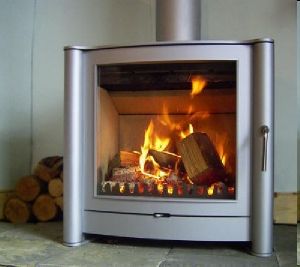
Will A Wood Burner Save You Money?

It's becoming increasingly popular for people to buy a woodburner to supplement or replace a gas or electric heating system because they simply can’t afford to pay their spiralling fuel bills. Changing to wood-fired heating saves many people a lot of money, but it takes time to recoup your initial investment in savings on fuel bills. The savings available vary, but these are the main points to consider when working out how much money you can save.
Purchase Costs
The most obvious cost is buying the woodburner. Wood burning stoves are available to suit all budgets, but the cheapest woodburners are not the most efficient. Spending a little extra to buy a more efficient stove can be worthwhile to gain savings in fuel costs over time. Bargain hunters tend to buy woodburners on the internet in order to get the cheapest prices. It can take a little work to compare deals properly – make sure the price advertised includes VAT and delivery, and see if there are any special deals on chimney liner or free fitting accessories with the stove. To ensure you have full manufacturers warranty cover on the woodburner, check that you are buying from an authorised retailer. You may also need to buy a chimney liner or flue system and accessories such as a stove pipe or register plate. If you are not sure what you need, get expert advice before you buy.
Installation Costs
Installation costs vary enormously depending what work needs to be done. If you need a flue liner for your chimney or to fit a twinwall flue system because you don’t have a conventional chimney, this will increase your installation costs. Sometimes fireplaces need to be altered for a woodburner to be installed, at an extra and sometimes unexpected cost. It is a good idea to have a stove installation survey from a  before you buy a woodburner – this will give you a clear idea of what work is necessary and the associated costs, as well as giving you an opportunity to get expert advice about what woodburner is most suitable for your requirements.
Running Costs
Research prices for firewood or coal both from local and nationwide suppliers, unless you are lucky enough to have a free source of firewood such as a friendly tree surgeon! To get the best prices on firewood or coal you need to buy in quantity – if you don’t already have a suitable storage area factor this into your budget as well. Demand for woodburners is increasing in the UK, but the Forestry Commission is implementing a program to develop the UK wood fuel industry over the coming years to ensure plenty of quality firewood will be available at reasonable prices. Recommended woodburner maintenance includes having your chimney swept at least once a year and an annual service of the stove by a HETAS qualified engineer – it’s a good idea to allocate some of your budget to cover these expenses.

Friday, 23 September 2011

The Woodfuel Cycle

In a bid to help both customers and retailers better understand and appreciate woodland management and firewood production, Hereford based firewood producer, Certainly Wood has just launched it's first YouTube video.
Entitled The Woodfuel Cycle, the four and a half minute video chronicles the journey from forest to stove and every stage in between.
Commenting on the video, Managing Director Nic Snell said: "This medium provides us with the perfect way to show our customers what goes into the production of firewood and offers an insight into the sacle of our operation in jsut a few minutes. It is a brilliant way to bring the process to life. We hope the video will help those retailers who have not had a chance to visit us and better understand the process. They can also use it in their showrooms and link to it via their websites to promote the importance of burning kiln dried logs"
Certainly Wood are planning to launch more videos throughout the year focusing on specific aspects of the business.

Wednesday, 21 September 2011

Explaining The Science Behind Climate Change

A new website that explains the science behind climate change was recently launched by Professor Sir John Beddington, The Government's Chief Scientific Adviser.
The website, which can be foind at www.bis.gov.uk/go-science/climatescience presents an overview of some of the most important areas of climate science study and aims to help those wishing to get behind the day-to-day headlines to learn more about the fundamental scientific issues involved.
With few areas of science having such profound implications for publuc policy and society, it is a research field not without controversy and headline hitting stories. For those uncertain about the state of scientific knowledge, the web resource explains where evidence is well established and where findings and projections remain uncertain.
Sir John said " Reporting on climate change science has often created more heat than light. The evidence is compelling that climate change is happening, that human activities are the major driver and that the future risks are substantial.
At the same time there is much we need to understand better; for example, the pace and extent of the changes we can expect, and regional impacts."
"The fact that uncertainty exists in climate science, as it does in other fields, does not detract from the value of evidence. But an appreciation of the nature and degree of uncertainty, and of the lielihood and potential severity of risks, is critical if the science is to properly inform decision-making."
The online rescource, hosted in a new section of the Government Office for Science website, explains the scientific issues, evidence and principles behind a number of key points including the contribution of human activities to climate change and how greenshouse gases actually hea the earth.
Carbon Dioxide levels are now over a third higher than they were before the industrial revolution and allegedly continues to rise fast.
Several independent studies show global average temperatures to be rising and many other observations such as Arctic summer sea ice extent, are said to confirm the long term warming trend.

Saturday, 21 May 2011

Go Green And Save Money

Our homes generate a quarter of the UK's CO2 emissions, yet a third of the energy we use is wasted. It's time to act, but what is truly practical and affordable for us to do? And can we save some money while we're at it? Channel 4 Homes Helps Us Take A Look Into How We can cut carbon emissions and save money.

The Loft

Up to a quarter of a home's heat can escape through the roof if it's badly insulated. According to the Building Research Establishment, if you were to put down 270mm of insulation in an empty loft, you'd save £145 a year. The greenest option would be to insulate it with natural, environmentally friendly products. These include Warmcel 100, made from recycled paper; Isonat Plus, made from UK-grown hemp and recycled cotton; and Thermafleece, which comes from UK sheep. You can buy all of them from EnergyWays at www.naturalinsulations.co.uk.

There are reductions to be made on insulation measures for home owners and landlords, as part of the government's Carbon Emissions Reduction Target (CERT). Contact your local Energy Saving Trust Advice Centre to see what's on offer. For more advice on insulation, see Fitting Insulation

Cost: £250 (installed); £50-£350 (DIY)
Return: Two to three years

The Walls

Like roofs, walls can also leak up to a third of the heat produced in your home. The government is very keen on cavity wall insulation at the moment, so grab a grant while you can. It takes less than a day to install, there's minimal disruption, and it could save you £110 a year on fuel bills, according to the Energy Saving Trust. Ideally, opt for eco-friendly Warmcel.

If your home was built before or around the 1920s, it probably has solid walls, and around 45% of heat is lost through them. Insulation is expensive and usually worth considering only when you're refurbishing, though it could save you £375 a year on fuel bills. Internal insulation consists of rigid insulation boards or a stud wall, and costs £5,500 to £8,500. External insulation consists of a layer

of insulating material attached to walls then finished with cladding or render, cost £10,500 to £14,500. Find a registered installer at The Insulated Render & Cladding Association (INCA).

Cost: (cavity walls) around £250 including CERT subsidy (see above); otherwise around £500
Return: Two years


Draught Proofing

Around 20% of all heat loss in a typical home is through ventilation and draughts. Obviously, some ventilation is essential, especially if you have solid-fuel or gas fires, but don't forget that wherever you can feel a draught coming in, warm air is going out.

Save around £25

by draught proofing doors and windows, and around £20 extra if you fill gaps between the floorboards and skirtings as well.

Cost: £100 if you do it yourself
Return: Four years (or one year if you do the floorboards and skirting, too)

Buying New Equipment

Appliances

Don't forget to look out for the official energy rating when you're buying a new appliance. 'A', 'A+' and 'A++' rated is good, but don't bother if it's less than 'B' or 'C'. It's difficult to cost out the saving, but as an example, an 'A' rated freezer or washing machine will only use a third of the energy of one with a lower rating. Sneak Preview: I'm told The new House 2 Home Megastore has some very efficient appliances that will be available for purchase when the site launches completely, which, i'm told is getting nearer everyday.

Saves: from £7 (for integrated digital TV) to £38 (for a fridge freezer)
Cost: Depends what you buy
Return: Four years

The Boiler

If you're thinking of installing a new one, go for it as soon as possible! Around 60% of all domestic CO2 emissions come from old boilers. New rules say boilers should have an 'A' efficiency rating, which basically means having a condensing boiler.

Save up to £235 by replacing an old G-rated boiler with a new A-rated one and installing a full set of heating controls.

Cost: From £650 (plus £600 to £800 for installation)
Return: Four years

Lightbulbs

Is your ceiling filled with those pretty little halogen bulbs? Each one uses 50w, while energy-efficient bulbs use up to four times less electricity to generate the same amount of light. Each one will save around £9 on your annual bill.

Cost: from 50p
Return: Within a year

Double Glazing

This will reduce heat loss by half and knock £130 a year off the average bill. Look for the energy-saving recommended logo, and if money's not a factor, choose Argon-filled triple-glazed timber-framed windows made with low-emissivity glass (look for the 'A' to 'G' energy rating and Forest Stewardship Council certification for the frame). 'If you are on a budget, secondary glazing that fits inside the existing frame is much more cost-effective and can reduce heat loss,' says Sally Oakes from the Centre for Alternative Technology.

Cost: £400 per unit
Return: 20 years+