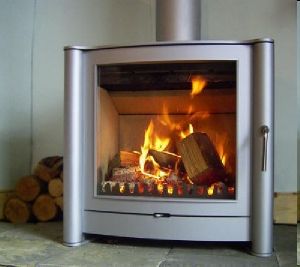
What Fire Brand do you want in your home?

Followers

Recent Updates

Celsi Fires Now in the UK

Celsi fires have now been released in the UK, with great reviews all over, the new technology is virtually a computer pretening to be a fire, with clean looks and great prices they are bound to be a hit.More…


Showing posts with label aga stoves. Show all posts

Friday, 2 December 2011

The Cold Weather Approaches

As your wood burning stove may have not been used for a few months, it is important to make sure that your chimney is swept before you start to use it again to ensure it is free from bird nests or other obstructions.
Now is a great time to have your chimney swept
With use, soot, deposits and tar can build up, reducing the chimney’s draw, make the stove run badly and can cause a chimney fire. Now is a great time to have your chimney swept, before the colder weather as more chimney sweeps will be available than when winter is in full swing.As well as making sure your chimney is safe and clear from blockages, it is also a good time to have your wood burning stove or open fireplace serviced to ensure the best performance, as HETAS installers are starting to enter their busiest period of the year.
In the mean time, here are some general safety tips for keeping your chimney in tip top condition;
  • Ensure your wood burning stove is installed and maintained in accordance with the manufacturer’s Installation Instructions. 
  • You should have your chimney swept at least once a year, depending on the fuel you use and how dry it is, how frequently your wood burning stove or fireplace is used, the type of chimney or flue and whether or not it is lined, as fewer deposits will build up in a lined chimney.
  • When burning wood, use only dry, seasoned logs with a maximum moisture content of 20% in your wood burning stove. If you burn green or wet wood, a lot of the heat in the stove’s firebox is lost in burning off the excess water. This reduces the stove’s efficiency, gives you less heat in the room and causes tar to condense in the chimney, which is one of the biggest causes of chimney fires.
  • Never burn cardboard boxes, waste paper or wood treated with preservatives and coatings containing heavy metals, or other toxic chemicals and contaminants in your wood burning stove.
  • If you have recently opened up and plan to use a fireplace, make sure it is inspected by a HETAS qualified engineer before use. Inspect the chimney breast, particularly in the roof space. Make sure that it is sound and that the sparks or fumes cannot escape through cracks or broken bricks. If in doubt, have your chimney lined as there can be warranty and house insurance issues with not lining.

Sunday, 25 September 2011

Will A Wood Burner Save You Money?

It's becoming increasingly popular for people to buy a woodburner to supplement or replace a gas or electric heating system because they simply can’t afford to pay their spiralling fuel bills. Changing to wood-fired heating saves many people a lot of money, but it takes time to recoup your initial investment in savings on fuel bills. The savings available vary, but these are the main points to consider when working out how much money you can save.
Purchase Costs
The most obvious cost is buying the woodburner. Wood burning stoves are available to suit all budgets, but the cheapest woodburners are not the most efficient. Spending a little extra to buy a more efficient stove can be worthwhile to gain savings in fuel costs over time. Bargain hunters tend to buy woodburners on the internet in order to get the cheapest prices. It can take a little work to compare deals properly – make sure the price advertised includes VAT and delivery, and see if there are any special deals on chimney liner or free fitting accessories with the stove. To ensure you have full manufacturers warranty cover on the woodburner, check that you are buying from an authorised retailer. You may also need to buy a chimney liner or flue system and accessories such as a stove pipe or register plate. If you are not sure what you need, get expert advice before you buy.
Installation Costs
Installation costs vary enormously depending what work needs to be done. If you need a flue liner for your chimney or to fit a twinwall flue system because you don’t have a conventional chimney, this will increase your installation costs. Sometimes fireplaces need to be altered for a woodburner to be installed, at an extra and sometimes unexpected cost. It is a good idea to have a stove installation survey from a  before you buy a woodburner – this will give you a clear idea of what work is necessary and the associated costs, as well as giving you an opportunity to get expert advice about what woodburner is most suitable for your requirements.
Running Costs
Research prices for firewood or coal both from local and nationwide suppliers, unless you are lucky enough to have a free source of firewood such as a friendly tree surgeon! To get the best prices on firewood or coal you need to buy in quantity – if you don’t already have a suitable storage area factor this into your budget as well. Demand for woodburners is increasing in the UK, but the Forestry Commission is implementing a program to develop the UK wood fuel industry over the coming years to ensure plenty of quality firewood will be available at reasonable prices. Recommended woodburner maintenance includes having your chimney swept at least once a year and an annual service of the stove by a HETAS qualified engineer – it’s a good idea to allocate some of your budget to cover these expenses.

Thursday, 1 September 2011

The History Of The Biofuel Stove


While a fireplace is often set into the framework of the house and is closed off in a way that allows you to see the flames and experience their heat, stoves offer a very different image. The stove image that comes to mind is of an enclosed and usually a raised metal structure that is often mostly closed off. Stoves, like our kitchen stove, can be cooked on, and even a stove that is solely responsible for heating does not usually offer much in the way of attractiveness, although it might be more efficient than a fireplace.

The problem with stoves is that they burn their fuel, which is released into the environment, and that this fuel burning can deplete some of our natural resources. While wood is technically a renewable resource, it is not the only fuel for a stove. Some stoves run on natural gas, and others run on coal, neither of which is immediately renewable. Since these are not the best environmental choices, people interested in creating a healthy alternative worked to develop a better stove.

The better stove that was developed is the biomass stove. These stoves run on natural and highly renewable fuel rather than making use of and depleting less renewable resources. While the biomass stoves still emit carbon because of the fuel that they are burning, they are at least not burning some of the resources that we have come to understand are limited in our world.

The first patent for biomass stoves appeared around 20 years ago, and these stoves were designed to be supplied with wood pellets. Although technically any stove that burns wood is a biomass stove because it burns wood, a biomass fuel, the term “biomass stove” is usually reserved in modern times for the stoves that have been designed to burn wood pellets or other fuel pellets.

Other Fuel Pellets

Wood pellets are no longer the only biomass that can be burned in biomass stoves. Because of the lack of alternative fuel sources, scientists began to experiment with what they already knew. It was realized that wood burning stoves could burn hotter and more efficiently with a special system that allowed them to burn the super-dense compressed wood pellets.

Further innovations have led to the question of what else we can burn for heat and even for an attractive fire. The biomass stoves became a way to replace fireplaces with a more energy efficient and therefore more environmentally healthy alternative. Even better, you may not even need to use an extensive ventilation system (like a chimney) to use a biomass stove; a small vent through the wall and up may do just fine.

Biomass stoves are now designed to burn with fuels other than wood pellets. Stoves have been specifically designed to burn fuel like corn pellets, and even waste that would otherwise be wasted like cherry or olive pits. These units require a calibration, which is usually done for you and can be selected with a simple button, and they are ready to burn your bio fuel of choice.

How Biomass Stoves Work

If you simply drop a handful of wood pellets into a biomass stove and try to light it, you will find that it doesn’t work. Your biomass stove is designed to make special use of energy to blow air through the fire pit in a way that allows the fuel to reach temperatures hot enough to burn. The user fills a special hopper, which feeds the pellets or pits to the fire at a regular interval.

The biomass stove, once lit, provides a great deal of heat to a home, allowing you to achieve much more comfortable warmth with much less fuel, making biomass stoves a more fuel efficient alternative to other heating features in your home. The fuel is highly efficient, which means that the use of the biomass stove lets you save a great deal of money that would otherwise be wasted on firewood, gas, coal, or other energy sources.

Also, because the biomass stoves are beginning to be able to run on even more energy efficient fuels, like highly renewable corn pellets, they are becoming even more positive in their impact on the environment. They save us money that we would otherwise spend on fuel, produce better heat, and put off less pollution than a traditional stove or fireplace does, and still provide us with good looks and a great source of heat.

Thursday, 30 June 2011

Fuel Costs Per kWh

As fuel prices rise, rise and rise some more more and more people may be facing fuel poverty, I frequently get asked what is the cheapest fuel to run? Gas or Electric? If i'm going for solid fuel should I buy a pellet stove?

With the help of BioMass Energy Centre who have provided the following graph and related research and documentation show that wood chips are the cheapest per kWh at just 2.6p followed by wood pellets at 3.9p per kWh, this is followed closely by natural gas at 4.1p per kWh. Surprisingly its heating oil next at 5.6pence per kilowatt hour.

After heating oil there is quite a large jump to the next priced fuel. LPG when bought in bulk comes in at 8.2p, a massive 4pence increase over natural gas, which actually comes as quite a shock. I'd have thought it would be quite similar, with LPG being possible 1-2 pence more expensive due to how its delivered.

Last but not least comes electricity, at a shocking (pardon the pun) 13p pence per kWh, more than treble that of natural gas and woodchips or pellets.


Fuel Price per unit kWh per unit pence per kWh
Wood chips (30% MC) £90 per tonne 3,500 kWh/t 2.6p/kWh
Wood pellets £185 per tonne 4,800 kWh/t 3.9p/kWh
Natural gas 4.1p/kWh 1 4.1p/kWh
Heating oil 56p per litre 10 kWh/ltr 5.6p/kWh
LPG (bulk) 54p per litre 6.6 kWh/ltr 8.2p/kWh
Electricity 13.0p/kWh 1 13.0p/kWh

So if you're looking for an energy efficient heater or fire we'd recommend that you'd look for a pellet stove such as the Aga Fusion(left) that can be programmed to come on up to 3 times a day or for a gas fire such as the Apex Capacious HE which boasts up to 89% efficiency when running on natural gas to make the most out of the fuel you're using.


Note:
All prices are prone to significant variation with geographical region, order quantities, overall contract size and duration, time of year, delivery distance and time, etc. Woodfuels in particular are available at prices both significantly above and below those quoted, and bulk prices will be subject to a minimum delivery size of perhaps 3-5 tonnes. Wood pellets bought in bags may be significantly more expensive than those bought in bulk.

Sunday, 26 June 2011

Heating a house with a wood burning boiler stove is an increasingly popular option in the UK

With Scottish Power putting their prices up and with the other big suppliers certain to follow. More and more people are turn ing back the clock, more and more people are returning to burning wood. Firewood is a secure and relatively cheap form of fuel and a wood burning stove provides a cosy focal point to any room. A back boiler wood burner stove gives your family plenty of hot water, as well as running a complete central heating system and by heating your home by burning wood as fuel, you are reducing your CO2 emissions.

A wood boiler stove is an appliance that can burn wood to create hot water. Some take the form of what you would recognise as a traditional wood burner whilst others look and work much more like a gas boiler.

There are various types and permutations of boiler for wood stoves available but they all do the same job - they transfer heat from the burning wood into water, which can then be piped where it is needed and used for heating or domestic hot water. In a traditional wood boiler stove the boiler is usually a simple metal box filled with water and with 2 or 4 tappings to allow you to attach your water pipes to it. These tappings are usually 1" BSP fittings. Usually these boilers replace the fire-bricks inside the firebox of the stove and are known as back boilers because the bulk of the boiler is at the back of the firebox.

Wood boiler stove heat output to water

Wood boiler stoves can come with a variety of rated boiler outputs from around 5,000 BTU to 90,000 BTU. Make sure to check whether the rated output is the maximum or nominal. The nominal output is the output at which the stove would normally be run and is of course lower than the maximum output. You would not drive a car at it's full speed all the time and a wood boiler stove is just the same. Also when sizing the boiler stove for your needs remember that you need to use the nominal heat output.

Central heating and hot water from a wood boiler stove

A boiler stove can be used to power your central heating system and to provide hot water as well. Designing such a heating and hot water system is relatively simple but you will need the help and advice of an experienced heating engineer.

Wood fired central heating

Here the wood boiler stove is connected to the house heating system, commonly radiators, and the heat from the burning wood is pumped around the house. If your house uses underfloor heating then you would connect your boiler stove to a hot water tank and then the underfloor heating would be connected to that.

Heating hot water with a wood burning boiler stove

One of the differences between a boiler stove and a conventional gas/oil boiler is that it takes time for the hot water coming from the stove boiler to get up to temperature. This means that you cannot simply take hot water directly from the stove boiler: you need to connect the boiler stove to a hot water tank. The water in the tank is heated by the stove and stored up for use when needed.

Unvented system

In an unvented system there is no header tank and the water in the pipes is under pressure. Modern heating systems run by gas boilers tend to be unvented (or pressurised). One give-away is that there is often a pressure gauge on the boiler measured in 'Bar'. When the water in a pressurised system expands the pressure in the system increases. Most stoves are not suitable to be directly linked up to a pressurised system because with a stove it is possible to boil the water in the boiler. However a vast majority of stoves supplied by authorised dealers can be linked directly to pressurised systems with the incorporation of an expansion vessel - which expands to cope with pressure increases, a pressure release valve, and a heat dump system with additional safety features.

Sunday, 20 March 2011

It's Not About Radical Design But About Moving Things Forward

A behind the scenes look at AGA's Coalbrookdale operation to find out just how its stoves are designed and tested.

At the heart of the Coalbrookdale site sits the AGA Foundry where quaker Abraham Darby discovered cast iron 300 years ago. Beneath the exterior of this historic site beats the heart of a modern and thriving foundry where David Carpenter, AGA's technical director and Tim Evans for Think Product Design are charged with creating AGA's latest stoves.

As Tim Evans put it, " With such an iconic name, you have to be faithful to the brand and show sympathy with the materials. Working with AGA isn't about radical design departures; it's about moving the products forward slowly so they appear to evolve. It's also a combination of both process and materials"

"For example, when we design using cast iron we want it to look like cast iron. The form, the ability to cast in fine detail and chacteristics of the material must not be hidden away, but rather worked with to give the products their unique appearance."
When asked if the marques world renowned cookers had any influence on the woodburning stoves he replied.
"Without wanting to sound too pretentios, when we started work on the new range of stoves for AGA we wanted to transport some of the DNA from the company's famous cookers. The simple lines, the honesty of the materials and solidity and timelessness of the designs were all important to us."
Tim Evans clearly believes that typical AGA customers, whislt design conscious, also tend to be traditionalists, so says the company has to find the right balance. "The stoves we were designing could not be ultra modern but, on the other hand, not overly decorative with scrolls, pillars and floral relief."
The resulting stove, the new Ludlow, retains mich of the charm without being overly fussy. But what about the interior? How do they deliver the cosy warmth that people expect? David Carpenter, AGA's technical director was characteristically succint. "Everything we do at AGA is tried and tested and improved until it achieves 'best in class' standards. It's exactly the same for one of our stoves. It needs to deliver the heat into the room effectively, the glass needs to be kept really clean, and most of it it needs to be efficient so that the homeowner gets the most out of their fuel."

A stove begins its life on the drawing board. Following a brief from AGA, Think Product Design works closely with AGA's product development team to complete initial concepts, discuss ideas and evolve the design. Once this stage has been reached, the drawings are transferred into a CAD package and more detail is added on the computer screen.
At this point, David Carpenter's Telford based research and development team join the process creating the internal structure of the stove and creating all the baffles and channels which guide the combustion process and deliver the fuel efficiencies and the air wash system. Once the CAD drawings are completed, a rapid prototype is made in plastic to see what the stove will look like in reality.

David adds "If we've reached this point and we're happy with the plastic prototype, we will invest in the toling and casting moulds to actually build the stove in cast iron. And when we've got the prototype cast iron stove, we can begin the testing process."
Testing is a rigorous process and one that the team at AGA is surprisingly passionate about. In a tone that few would argue with, David says, "There are so many companies offering lower costs and unapproved stoves, as well as stoves over the Internet and inferior copies, that some homeowners simply don't know what they're having installed. It's quite scarry how people will just go on price alone when they choose a stove. It might look like a nice product, but the quality just isn't there. Poorly design, badly manufactured and with no evidence of third party approval, no efficiency rating and very little attention paid to compliance and testing."

So what kinds of tests does AGA put their stoves through? Unsurprisingly they go through rigorous testing at AGA's research and development department overseen by the company's technical team. When AGA is happy that the stove reaches the manufacturing quality standards and efficiency it needs, it is then sent to GASTEC at CRE for european approval and, on some models further work is undertaken to achieve Smoke Exempt status, such as the Little Wenlock SE.
David adds " To reassure both our suppliers and homeowners the approval is clearly marked on the appliance data plate and all AGA stoves are HETAS listed - It means that all the salient information is in one, clearly visible place."
Once all the tesing is complete the team is happy that no modifications need to be made, the stove is handed over to the marketing team to launch, promote and add to the AGA range.

Friday, 8 October 2010

The Aga Ludlow Stove


Aga are a household name, well known for desirable product ranges and high quality cast iron construction, they keep producing the best products available to enhance their longstanding ranges and most recently have added the Ludlow cast iron stove to the collection.
The Aga Ludlow is now available as the Aga Ludlow Multifuel stove and as the Aga Ludlow Woodburning Smoke Exempt Stove, providing the perfect stove for your needs.
The Aga Ludlow is a stunning example of a solid cast iron stove that generates a tremendous heat output and is suited to traditional and contemporary homes.
Following the outrageous success of the Aga little Wenlock stoves, the Aga Ludlow stove has kept the desirable design appeal of the Aga range, with stylish black wired handle and similar control systems to the Wenlock. An addition to the control system is the tertiary intake air flow control that allows exceptional control of the air wash system. As well as great design, the Aga Ludlow can boast a tremendous 9.7kW maximum heat output, which is hot, hot, hot! The nominal heat output is 6.5kW and the efficiency of the Ludlow is 76%. The Ludlow can also be fueled up and left to burn all night, resulting in a lovely toasty warm room in the morning. As well as the impressive design appeal and even more impressive high heat output and easy, effective controls, the Aga Ludlow includes a removable shaker grate, fire fence, ash pan and front ash tray.
The Aga Ludlow is designed to be used with a class 1 chimney and has a 5inch diameter top flue and is sure to be a product destined for great popularity, so get hold of yours while the stocks last (or wait for the next batch to be made!!).